Turn It Up: The Radio DJs Who Ran Funk's Underground Railroad
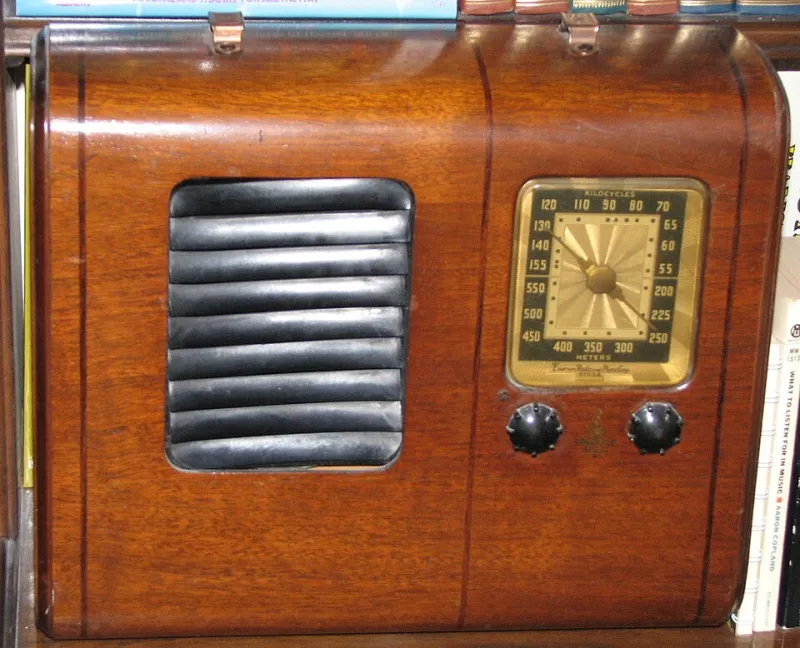
Photo: Joe Haupt from USA, CC BY 2.0, via Wikimedia Commons
Picture a city — could be Chicago, could be Atlanta, could be Baltimore — sometime in the early 1970s. It's late on a Friday night. A Black neighborhood is winding down from the work week. And coming through a transistor radio, a car stereo, or a living room console is a voice. Not just any voice — a voice with authority. A voice that knows your neighborhood, knows your life, knows exactly which record is going to make you forget the week you just had.
That voice belonged to a DJ. And that DJ was doing something that doesn't get talked about nearly enough in the history of funk and soul music.
More Than a Playlist
It's easy to look back at the golden era of Black radio and reduce it to nostalgia — the cool nicknames, the rapid-fire patter, the signature sign-offs. But what those DJs were actually doing was far more consequential than entertainment. They were functioning as cultural editors, community organizers, and in many cases, the only meaningful gatekeepers standing between an independent funk artist and an audience that would genuinely connect with the music.
Mainstream pop radio in the 1960s and 1970s was not interested in funk. The genre was too raw, too rooted in Black working-class experience, too resistant to the kind of clean commercial packaging that white-owned stations preferred. What that meant in practice was that artists like Funkadelic, Bootsy Collins, and a hundred lesser-known regional acts depended almost entirely on Black radio to survive commercially.
"Those DJs weren't just spinning records," explains a music historian who has spent years documenting Black radio's role in the funk era. "They were making decisions about what mattered. What deserved to be heard. And they were doing it with almost no resources, under constant pressure from station owners who wanted them to play safer, more mainstream material."
The Gatekeepers Nobody Wrote About
Figures like Frankie Crocker in New York, Georgie Woods in Philadelphia, and the Magnificent Montague in Chicago and Los Angeles became legends in their communities long before the broader music press noticed them — if it ever really did. Their influence on what records broke, what artists got traction, and what version of funk reached the ears of Black America was enormous.
Crocker, who ruled WBLS in New York through the 1970s, was particularly significant. His programming choices didn't just reflect the tastes of his audience — they helped form those tastes. When Crocker got behind a record, it moved. Artists and label representatives knew it, which gave him a kind of informal power that operated entirely outside the structures that mainstream music journalism was paying attention to.
But the influence of these DJs wasn't limited to commercial outcomes. They were also doing something culturally essential: creating a shared sonic experience for communities that mainstream media consistently ignored or misrepresented. The radio show was a gathering place. It was a statement about what Black culture valued, what it celebrated, what it refused to let be erased.
Resisting the Corporate Squeeze
By the late 1970s and into the 1980s, the landscape started shifting in ways that put real pressure on independent Black radio programming. Corporate consolidation of the radio industry, the rise of format radio with its rigid playlists and consultant-driven programming, and the commercial success of disco all worked against the kind of curatorial freedom that had defined the previous decade.
Some DJs adapted. Others fought back openly, refusing to abandon funk and soul even as station management pushed them toward safer formats. A few lost their jobs over it. The tension between artistic integrity and commercial survival that funk artists themselves were navigating was playing out in parallel inside the radio booth.
"You had DJs who were essentially doing the same thing the artists were doing — trying to hold onto something real while the industry tried to sand all the edges off," says one radio veteran who got his start in the late 1970s. "And a lot of them paid a price for it."
The documentary record of this era is frustratingly thin. Broadcast archives are incomplete. Many of the most important DJs of the period left behind limited documentation of their work, in part because nobody at the time thought it needed to be preserved. What survives tends to be fragmentary — recordings made by listeners, oral histories gathered years after the fact, the memories of artists who remember which DJ gave them their first real break.
The Documentary Gap
This is actually one of the places where the intersection of funk history and documentary filmmaking becomes genuinely interesting. The story of Black radio's role in funk culture is exactly the kind of narrative that deserves the full documentary treatment — and it largely hasn't gotten it yet.
There have been individual profiles, segments in broader music history documentaries, and a handful of radio-focused projects that touch on the funk era. But a comprehensive, deeply reported documentary about the DJs who built and sustained funk culture from behind the microphone remains, somewhat remarkably, unmade.
The raw material is there. Living DJs and their families, artists who can speak to specific moments when a particular DJ changed the trajectory of their career, archival recordings that capture both the music and the personalities. What's missing is the sustained attention and resources to pull it all together.
The Frequency Is Still Live
What makes this history feel urgent rather than merely nostalgic is the degree to which it maps onto contemporary conversations about algorithmic curation, cultural gatekeeping, and who gets to decide what music matters.
The playlist has replaced the DJ in many listeners' lives. Algorithms surface music based on engagement data, past behavior, and commercial relationships that have nothing to do with cultural context or community relevance. It's efficient. It's also missing something that those late-night radio voices understood intuitively: that music means different things depending on who's choosing it, and why, and for whom.
The DJs who championed funk weren't neutral. They had opinions, relationships, and a deep sense of obligation to their communities. That subjectivity wasn't a bug — it was the whole point. The groove they were protecting wasn't just a sound. It was a way of being in the world.
And somewhere, on a station you might have to search a little harder to find, that frequency is still broadcasting.