Groove on Film: The Directors Who Made Funk and Soul Look as Good as They Sound

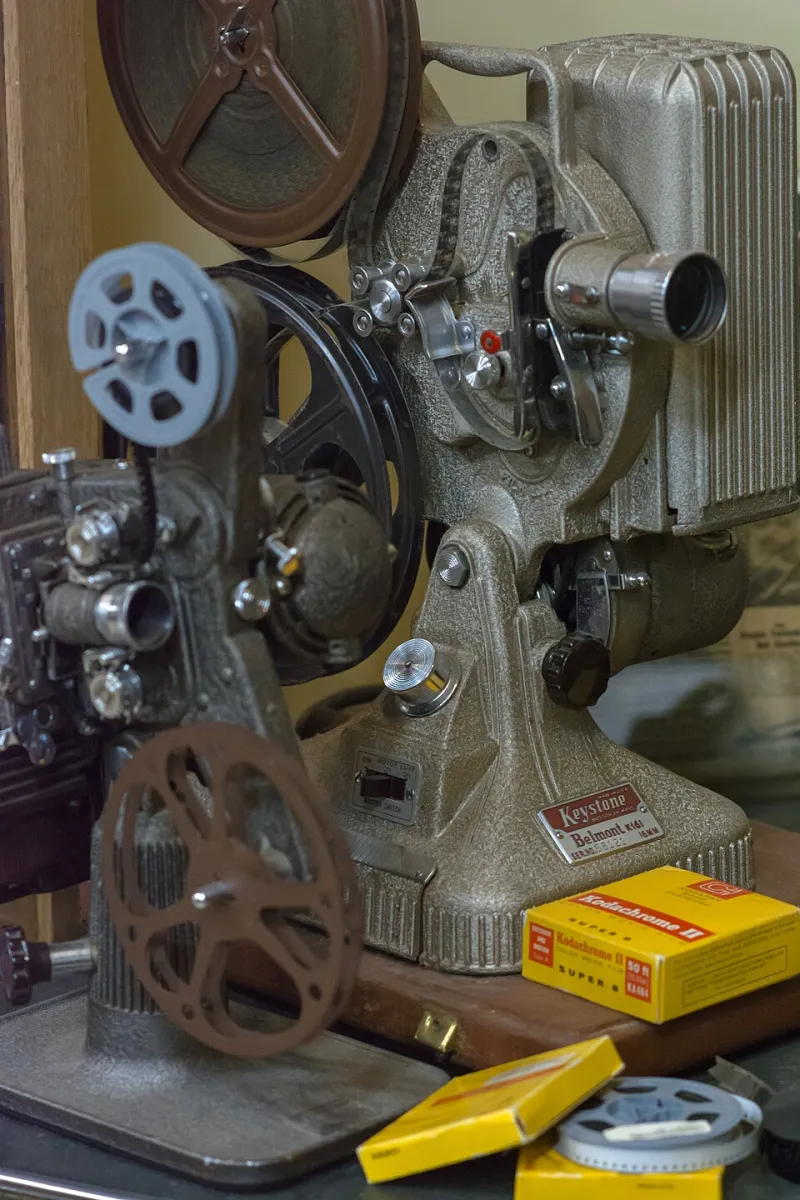
Photo: CaseyJNewell, CC BY-SA 4.0, via Wikimedia Commons
Music this physical, this alive, practically demands a camera. Funk and soul have always been about more than what you hear — they're about what you see when a bassist locks into a pocket groove, when a vocalist closes their eyes and just lets it go, when an entire room full of people surrenders to the same beat at the same moment. The question was always: who had the eye to capture that?
As it turns out, a few directors did. And the work they left behind is as important to the story of funk and soul as any album or concert tour.
The Documentary as a Time Machine
Before music videos existed as a commercial format, documentary filmmakers were the ones responsible for preserving the visual record of groove culture. And the best of them understood that you couldn't just point a camera at a stage and call it done.
D.A. Pennebaker is best known for his Dylan doc Don't Look Back, but his work capturing live performance helped establish a grammar for how music documentaries could function — not as promotional tools, but as genuine cinema. The handheld aesthetic, the fly-on-the-wall intimacy, the willingness to let uncomfortable moments breathe — these became the tools that later directors would pick up and apply specifically to funk and soul contexts.
The 1968 concert film Soul to Soul, documenting a massive music festival in Ghana featuring artists like Wilson Pickett, Ike and Tina Turner, and Santana, stands as one of the most underappreciated documents of Black music in the early 1970s. Director Denis Sanders captured something genuinely rare: the moment when American soul music encountered its African roots in a live, communal setting. The footage crackles with a kind of historical electricity that no studio recording could replicate.
Wattstax and the Power of Context
If there's one film that demonstrates what a great director can do with funk and soul as raw material, it's Wattstax. Released in 1973 and directed by Mel Stuart, the film documented the 1972 Wattstax Music Festival in Los Angeles — a Stax Records-organized event held at the Los Angeles Memorial Coliseum in the Watts neighborhood, seven years after the Watts Rebellion.
Stuart didn't just film the performances. He wove in street-level interviews, comedic segments featuring Richard Pryor, and documentary footage of everyday life in Watts, creating a portrait of a community rather than just a concert. The result is a film that uses funk and soul as a lens through which to examine Black American life in the early 1970s — its joy, its grief, its anger, and its defiance.
The Staple Singers, Isaac Hayes, Rufus Thomas — watching them perform in Wattstax is a different experience than listening to their records, because Stuart understood that the music meant something specific to the people in that stadium, and his job was to honor that meaning rather than just document the spectacle.
The Music Video Era and the Directors Who Elevated It
When MTV launched in 1981, it initially had a complicated relationship with Black music — a story that's been well documented and doesn't need rehashing here. But once the door opened, the directors who rushed through it with funk and soul sensibilities did some of the most visually inventive work the format has ever seen.
Hype Williams became the defining visual voice of late-1990s hip-hop and R&B, but his aesthetic was deeply rooted in the funk tradition — the wide-angle fish-eye lenses, the saturated colors, the emphasis on physical presence and movement. His video for Missy Elliott's "The Rain (Supa Dupa Fly)" in 1997 felt like a full creative statement, not a promotional clip. It owed a visible debt to the theatrical ambition of George Clinton's stage productions and the Afrofuturist visual vocabulary that funk had been developing for two decades.
Melina Matsoukas, who directed Beyoncé's "Formation" and later co-created the TV series Insecure, has spoken openly about how soul and funk culture shaped her visual sensibility. Her work consistently uses music as an entry point into broader conversations about Black identity, Southern history, and cultural pride — exactly the kind of layered storytelling that the best funk documentaries pioneered.
The Language of the Groove
What do these directors share? A willingness to treat the music as more than background. In the best funk and soul films, the groove isn't just the soundtrack — it's the argument. The rhythm section tells you something about community and collective experience. The vocal performance tells you something about individual struggle and transcendence. The visual language of a great director makes those connections explicit.
There's also a consistent interest in the body. Funk is, at its core, a physical genre — it demands a response from the people hearing it, and the directors who've captured it best have always understood that you need to show the audience, not just the stage. The reaction shots in Wattstax, the crowd footage in Soul to Soul, the dancers in a Hype Williams video — these are all doing the same thing: showing you what the music feels like from the inside.
What Contemporary Filmmakers Are Inheriting
The visual language of funk and soul is very much alive in contemporary filmmaking. Directors like Bradford Young, whose cinematography on Selma and Arrival carries a warmth and physicality that traces back to documentary traditions, have talked about the influence of Black music culture on how they think about image-making.
Streaming platforms have also created new space for long-form documentary work about funk and soul history, giving directors room to go deeper than a 90-minute theatrical release allows. The challenge now is making sure those projects are led by filmmakers who actually understand the culture — who know the difference between documenting a genre and celebrating it.
The groove has always been worth capturing. The question, as always, is whether the person behind the camera has the ears — and the eyes — to do it justice.