No Name on the Album, All Soul in the Groove: Meeting Funk's Unsung Architects
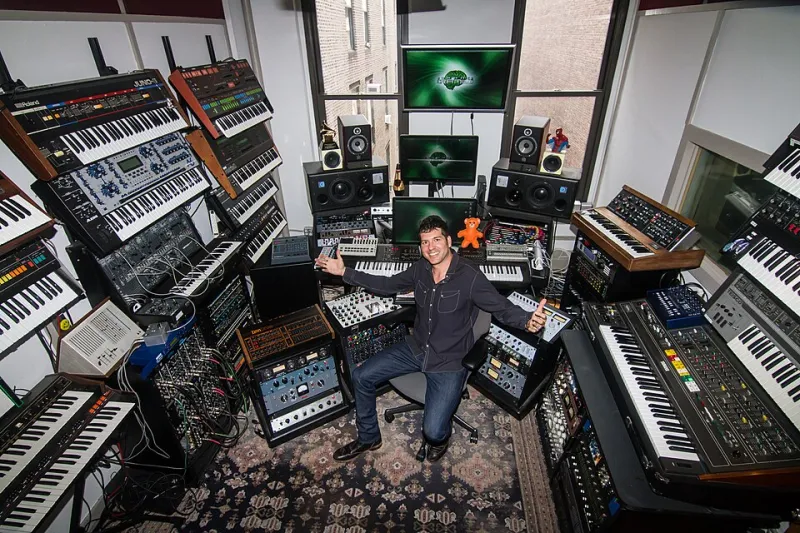
Photo: Strangecranium, CC BY-SA 4.0, via Wikimedia Commons
Next time you drop a needle on a classic '70s soul record — something from Marvin Gaye's What's Going On era, or an early Isley Brothers side, or really anything that came out of Muscle Shoals — take a second before the first note hits. Think about who's actually in that room. Because there's a very good chance the name on the cover is not the person responsible for what's about to move you.
That's not shade. That's just the architecture of the music business during one of the most creatively explosive eras in American musical history. And the people who built that architecture — the session bassists, the horn arrangers, the studio engineers who could hear a room better than most people can hear a melody — deserve a whole lot more than a footnote.
The Wrecking Crew Effect
Let's start on the West Coast, because if you're talking about session musician legacy, you have to talk about the Wrecking Crew. This loose collective of Los Angeles-based studio players — people like bassist Carol Kaye, drummer Hal Blaine, and keyboardist Larry Knechtel — played on an almost incomprehensible number of hit records between the early '60s and the mid-'70s.
We're talking the Beach Boys, the Mamas & the Papas, Frank Sinatra, and plenty of soul and R&B artists who needed a tight rhythm section and needed it yesterday. Kaye alone estimates she played on tens of thousands of recordings. Her bass lines are embedded in the American sonic subconscious at this point.
The 2015 documentary The Wrecking Crew (directed by Denny Tedesco, son of guitarist Tommy Tedesco) finally put faces and names to sounds that had been anonymous for decades. It's exactly the kind of storytelling that FunkDoc exists to celebrate — music history told from the inside out, not the top down.
Muscle Shoals and the Swampers
Shift east to northern Alabama and you find a different kind of magic. The Muscle Shoals Rhythm Section — nicknamed the Swampers — were a group of white musicians from the Deep South who somehow became the go-to studio band for some of the most soulful Black music ever recorded. Aretha Franklin cut I Never Loved a Man (The Way I Love You) there. Wilson Pickett recorded Land of 1,000 Dances in that room. The Rolling Stones came to Alabama looking for something they couldn't find anywhere else.
The 2013 documentary Muscle Shoals does a beautiful job of sitting with this paradox — how did this happen? How did a small town in Alabama become the unlikely epicenter of American soul? The answer, as the film makes clear, is the musicians. Bassist David Hood, drummer Roger Hawkins, keyboardist Barry Beckett, and guitarist Jimmy Johnson created a groove language that was entirely their own. Artists flew in from across the country just to be in the room with them.
Hood, in interviews, has talked about how the goal was always to serve the song — to find the pocket and live in it, not to show off, not to dominate. That philosophy of selfless musicianship is exactly what separates a great session player from everyone else.
The Funk Brothers: Detroit's Invisible Engine
If Muscle Shoals was a surprise, Motown's session crew — the Funk Brothers — was an open secret that somehow stayed secret anyway. These were the musicians behind virtually every classic Motown record: the Four Tops, the Supremes, Stevie Wonder, Marvin Gaye, Smokey Robinson. The grooves, the fills, the arrangements — all of it came from a rotating cast of Detroit players who recorded in a basement studio called Hitsville U.S.A.
The 2002 documentary Standing in the Shadows of Motown finally gave them their due. It's a film that genuinely makes you feel something — partly because the music is undeniable, and partly because you realize how long these people went without recognition. Bassist James Jamerson, widely regarded as one of the most influential bass players in history, died in relative obscurity. His work on tracks like Ain't No Mountain High Enough and What's Going On is foundational to everything that came after him in popular music, and for years most people couldn't have told you his name.
The film features surviving members performing their old parts live, and it's one of the most moving things you can watch if you care about where music comes from.
The Engineers in the Room
Session musicians get at least some recognition eventually. Studio engineers often get none at all. But ask any producer worth their rate card and they'll tell you: the engineer is half the sound.
Rudy Van Gelder, who recorded the majority of the Blue Note jazz catalog, understood acoustics and microphone placement in ways that were genuinely ahead of his time. His influence trickled directly into soul and funk production — the warmth, the presence, the way a bass drum feels physical rather than just audible.
On the funk side, engineers like Tom Dowd (who worked extensively with Atlantic Records artists including Ray Charles and Aretha Franklin) and Ron Lenhoff brought technical precision to sessions that were otherwise organized chaos. Dowd in particular was known for his ability to capture live energy without sterilizing it — a balance that's much harder to achieve than it sounds.
Why This Matters Right Now
Here's the thing about celebrating these folks in 2024: it's not just about historical correction, though that's important. It's about understanding where music actually comes from. In an era of bedroom production and AI-generated beats, there's something genuinely radical about sitting with the fact that the greatest grooves in American music history were created by rooms full of people listening to each other.
The documentaries are out there. The oral histories are being recorded. Archival projects are digitizing session logs and studio photographs that would otherwise disappear. And platforms like this one exist specifically to make sure those stories reach people who care.
So the next time you're deep in a funk record and something hits you right in the chest — some bass fill that lands perfectly, some horn stab that arrives exactly when it should — take a second. That was somebody's life's work. Somebody who probably never got the credit they deserved.
They built the foundation. The least we can do is know their names.