One Night, One Stage, No Excuses: How James Brown Rewrote the Rules of Live Music
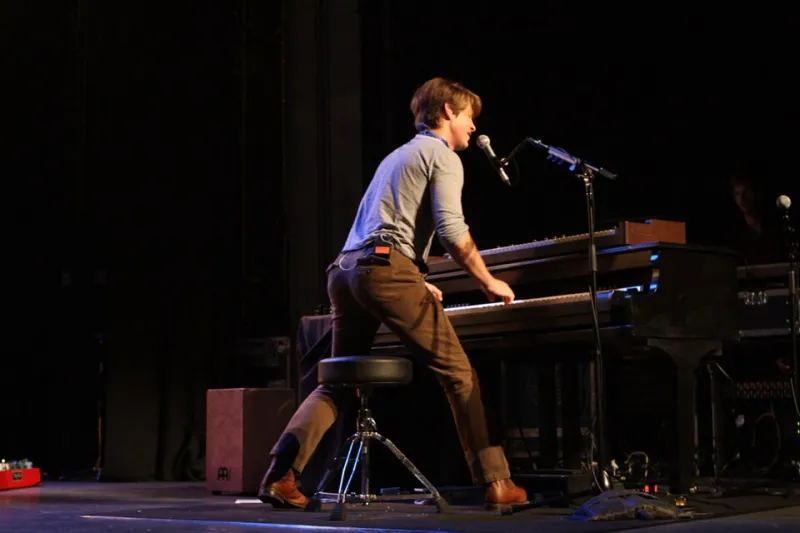
Photo: Eva Rinaldi, CC BY-SA 2.0, via Wikimedia Commons
There's a reason musicians still talk about James Brown the way coaches talk about Vince Lombardi. The man didn't just perform — he operated. Every show was a precision exercise wrapped in sweat, sequins, and raw, uncut soul. And if you think modern concert culture — the tight choreography, the band discipline, the sheer physical commitment artists bring to the stage — just appeared out of nowhere, you haven't been paying close enough attention.
James Brown didn't borrow from the concert playbook. He wrote it.
The Show That Changed Everything
If you want a single document that captures what Brown brought to live performance, start with Live at the Apollo — recorded on October 24, 1962, at the Apollo Theater in Harlem. Brown reportedly paid for the recording himself after his label, King Records, thought a live album was a waste of money. He knew better.
The record sat at number two on the Billboard pop charts for 14 weeks. It wasn't just a commercial win — it was proof that the energy of a live Black performance could translate, could travel, could reach audiences who'd never set foot in Harlem. Brown understood something fundamental: the stage was sacred ground, and every single night had to feel like the last show on Earth.
That philosophy never softened. Decades later, artists from Prince to Bruno Mars to Beyoncé have cited that same relentless commitment as the DNA they tried to replicate.
The Fines, the Cues, and the Capes
Here's something that surprises people who only know Brown from the greatest hits: he ran his band like a military operation. Musicians in the Famous Flames were fined for missed cues, wrong notes, and — famously — showing up with unshined shoes. It sounds harsh, but the result was a live unit that moved like one organism.
Brown developed a private cue system with his bandleader that allowed him to change tempos, switch songs, and redirect the entire show mid-performance using nothing more than subtle hand signals and foot movements. Audiences had no idea. They just felt it — the way a groove would suddenly tighten, the way the horns would cut out at exactly the right moment.
Fred Wesley, the legendary trombonist who played with Brown for years, has spoken in interviews about what it felt like to be inside that machine. You had to be locked in completely. There was no coasting, no autopilot. Brown would change the set on the fly, and your job was to follow without flinching.
The cape routine — where Brown would collapse to his knees seemingly exhausted, only to be draped with a cape and led offstage, before dramatically throwing it off and returning to the mic — wasn't just theater. It was a masterclass in audience manipulation. He made people feel like they were witnessing something unrepeatable. And honestly? They were.
Sweat as a Performance Metric
Brown famously said he judged a show's success by how much he sweated. That's not a throwaway line — it reflects a genuine philosophy about physical commitment to performance. He was doing footwork that would challenge trained dancers, dropping to the splits at 40, 50, even 60 years old. His shows ran long, hit hard, and left audiences genuinely exhausted just from watching.
This raised the bar in ways that are hard to overstate. Before Brown, plenty of R&B acts were smooth and polished — think the supper club elegance of a Nat King Cole performance. Brown said: what if we go the other direction entirely? What if the show is an athletic event?
You can draw a straight line from that idea to the concert productions of artists like Janet Jackson, who built elaborate physical performances into her touring model. Or to Michael Jackson — who has spoken at length about studying his father's peer — whose moonwalk and stage presence owe a significant spiritual debt to the man from Augusta, Georgia.
The Blueprint for Modern Stage Production
Beyond the personal charisma, Brown was also an early innovator in how a touring show was structured. He traveled with a full band, a horn section, backup vocalists, and a production team — long before that was standard practice for Black artists at his level. He insisted on quality sound systems at a time when many venues weren't equipped to handle them.
His insistence on professionalism extended to every corner of the operation. The look of the show mattered. The pacing mattered. The way the band dressed mattered. Bootsy Collins, who played bass with Brown in the early '70s before heading off to Parliament-Funkadelic, has talked about how the experience was like going to music school — except the tuition was paid in pressure and the lessons came fast.
Contemporary touring artists benefit from that legacy every single night, often without realizing it. The idea that a live show should be a complete experience — visually, sonically, emotionally — traces back to what Brown was assembling in the 1960s with far fewer resources and far higher personal stakes.
Still the Standard
What makes Brown's influence so durable isn't just that he was talented. Plenty of talented people come and go. It's that he treated the live show as the truest expression of who he was as an artist. Records were documents. The stage was where it was real.
In an era where artists can generate massive fanbases without ever performing live, that ethos feels almost radical. But spend any time with musicians who've built serious careers on stage — from funk veterans to today's neo-soul acts — and Brown's name comes up again and again. Not as a historical footnote, but as an active reference point.
The Godfather didn't just leave behind a catalog. He left behind a standard. And every artist who steps on a stage, works the crowd, and gives everything they've got is, whether they know it or not, answering a challenge James Brown issued decades ago.
Feel it? Good. Now don't miss your cue.