Still Funky After All These Years: Meet the Artists Carrying the Groove Into 2024
Photo: Cindy Funk, CC BY 2.0, via Wikimedia Commons
Every few years, someone writes the obituary for funk. The genre's too old, they say. Too tied to a specific era. Too dependent on a live-band energy that modern audiences have supposedly lost the patience for. And every few years, those writers end up looking pretty silly when a new wave of artists shows up and reminds everyone that the groove doesn't need permission to survive.
2024 is shaping up to be one of those years. And this time, the evidence is hard to argue with.
Vulfpeck and the New Economics of Groove
Let's start with the band that basically proved the whole argument before most people were even paying attention.
Vulfpeck — the Ann Arbor, Michigan outfit built around bassist Joe Dart and multi-instrumentalist Jack Stratton — has spent the last decade building one of the most devoted fanbases in contemporary American music without ever chasing radio play or algorithmic approval. Their approach is almost aggressively simple: make tightly arranged, deeply funky music, release it with genuine personality, and trust that people who love groove will find their way to it.
They famously released a silent album on Spotify in 2014 just to game the streaming royalties and fund a free tour. That's the kind of creative audacity that would've made George Clinton proud. And their live shows — which have graduated from small clubs to venues like Madison Square Garden — are documented proof that a younger audience is genuinely hungry for the real thing.
Dart, in particular, has become something of a folk hero among bass players. His pocket is immaculate. His tone is warm and round in a way that feels like a direct line back to Bootsy Collins and Larry Graham. But he's not imitating anyone. He's synthesizing.
Cory Henry: The Church and the Club, Reunited
If you want to understand where funk's spiritual dimension is living in 2024, start with Cory Henry.
The Brooklyn-born keyboardist and vocalist came up playing organ in church — a background that's given him a sense of dynamics and phrasing that most players spend decades trying to develop. His work with the jazz collective Snarky Puppy brought him to a wider audience, but his solo output and his touring band, the Funk Apostles, is where the full picture comes into focus.
Henry's music sits at the intersection of gospel, soul, and deep funk in a way that feels genuinely earned rather than calculated. His 2022 album I Need You was a love letter to the classic soul tradition that also managed to feel completely current. And his live performances — which can stretch improvisational passages out to extraordinary lengths while never losing the audience — are the kind of thing that gets passed around on video with the caption "you need to see this."
Documentary filmmakers have started paying attention, too. There's real cinematic potential in the Cory Henry story, and it wouldn't be surprising to see a proper long-form profile of his work land on a streaming platform in the next couple of years.
Scary Pockets and the Viral Groove Economy
Something interesting has happened to funk in the YouTube and TikTok era, and the band Scary Pockets is right at the center of it.
The project — built around guitarist Jack Conte and keyboardist Ryan Lerman, with a rotating cast of guest vocalists — takes pop songs you wouldn't expect and rebuilds them from the ground up as tight, live-sounding funk arrangements. The results are often genuinely surprising. A Billie Eilish song reinterpreted through the lens of a late-'70s session recording. A Taylor Swift track that suddenly sounds like it was always supposed to have a wah-pedal guitar in it.
The format works for a couple of reasons. First, the musicianship is legitimately excellent — these aren't novelty covers, they're serious arrangements executed with real chops. Second, the approach introduces funk's sonic vocabulary to listeners who might never seek it out on their own terms. You come for the familiar song. You leave understanding, maybe for the first time, why that bass-and-drums pocket feels so satisfying.
It's a clever entry point, and it's building an audience that will eventually go looking for the original sources.
The Underground Is Wide Open
Beyond the artists with significant streaming numbers, there's a sprawling underground funk scene that doesn't get nearly enough coverage.
In cities like New Orleans, Los Angeles, Atlanta, and Chicago, weekly funk nights at small venues are drawing consistent crowds of people who want to dance to live music. Brass bands in New Orleans have always kept a version of this flame burning, but the scene has expanded considerably. Collectives like the Dumpstaphunk orbit and various New Orleans Social Club-adjacent projects are doing serious work that deserves wider attention.
On the festival circuit, events like the Funk Fest tour — which hits cities across the South and Midwest — and the various incarnations of jam-band adjacent festivals where funk is a primary language are showing real staying power. These aren't nostalgia events, though the legacy acts certainly draw crowds. The newer artists on those lineups are the ones to watch.
Chromeo and the Irony-Free Dance Floor
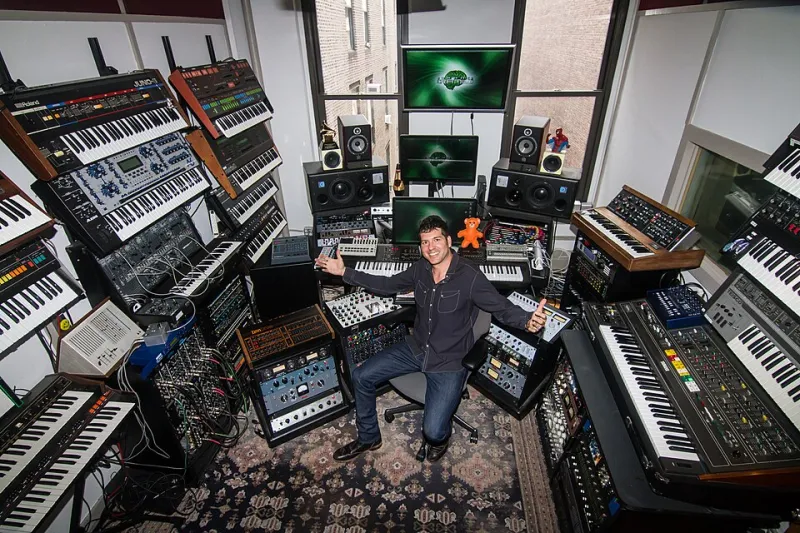
Canadian duo Chromeo — Dave 1 and P-Thugg — have been making a specific kind of argument for funk's relevance since the early 2000s, and in 2024 they're still at it. Their argument goes something like this: the synth-funk and boogie sounds of the early '80s were genuinely great, the production techniques involved were genuinely sophisticated, and there's no reason to treat any of it as a guilty pleasure.
They're right, and their albums hold up. More importantly, their influence on a younger generation of producers who grew up hearing their records is starting to show up in interesting places. The aesthetic they championed — warm analog synthesis, danceable rhythms, earnest songwriting — has filtered into indie pop, R&B, and electronic music in ways that trace back, however indirectly, to the funk tradition they were celebrating.
What 2024 Actually Sounds Like
Here's what's genuinely exciting about funk right now: it's not trying to justify itself anymore. The artists doing the most interesting work in this space aren't making the case for the genre's relevance — they're just making music, and the relevance is self-evident.
The groove has always had a way of finding the people who need it. In 2024, with live music culture rebounding and listeners increasingly hungry for music that demands something from them physically — music that wants you to move — funk is in a better position than it's been in years.
The documentary about this moment hasn't been made yet. But the story is definitely happening, one gig and one groove at a time.