Old School, New Ears: The Quiet Revolution of Funk's Mentorship Underground
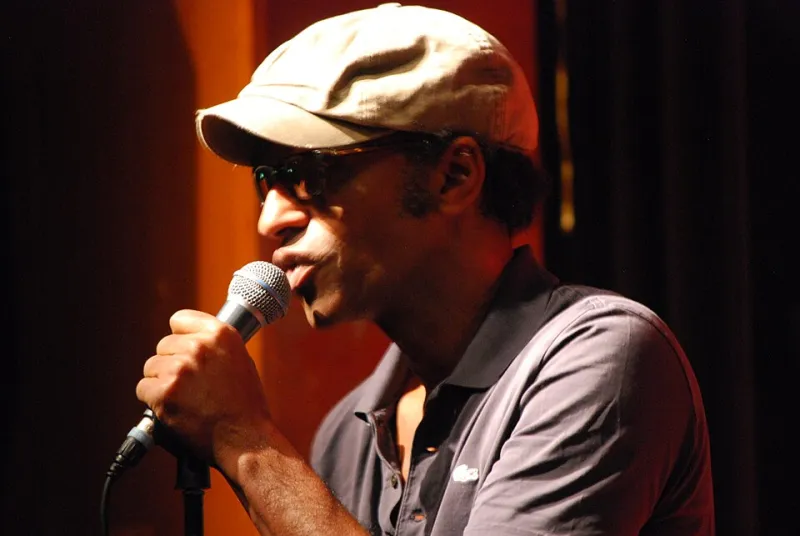
Photo: R.P. Braun, CC BY-SA 4.0, via Wikimedia Commons
There's a documentary waiting to be made — maybe a dozen of them — about what happens when a twenty-something producer pulls up a chair next to a seventy-year-old funk veteran and just listens. No cameras rolling. No social media content being generated. Just two people in a room, one of them talking about why a snare hit lands differently when you think about it differently, and the other one scribbling notes or nodding slowly, trying to absorb something that can't fully be written down.
This is happening right now, all over the country. It's not always visible. It doesn't always end up in a press release. But it might be the most important thing going on in American music.
The Knowledge That Doesn't Live in the Sample
Here's the thing about sampling — and nobody in the funk world is anti-sample, let's be clear — it captures a moment. It captures the sound of a thing. What it can't capture is the why behind it. Why did Clyde Stubblefield leave space exactly where he did? Why did Bootsy Collins approach a bass line as a conversation rather than a foundation? Why did Bernard Purdie's shuffle feel different from every other shuffle that existed before or after it?
Those questions don't have answers you can find in a waveform. They live in the heads and hands of the people who were there — and increasingly, in the heads and hands of younger artists who have had the good sense and good fortune to sit down with those people and ask.
Producers across genres — from neo-soul to hip-hop to contemporary R&B — are increasingly talking about this kind of direct transmission as a turning point in how they understand music. Not just funk as a genre, but funk as a philosophy. As a way of thinking about time, feel, and the relationship between the individual and the collective.
Learning to Hear Differently
One of the recurring themes in conversations with younger producers who have studied with funk veterans is this idea of learning to hear differently. Not hearing more — hearing differently. Paying attention to different things.
Classic funk production is full of choices that seem counterintuitive until someone explains the logic. Why is the mix so dry? Because the room is the groove — you don't want reverb washing out the pocket. Why does the bass sit so high in the mix? Because the bass is the conversation partner for the vocals, not just the rhythmic anchor. Why does the horn arrangement feel like it's slightly behind the beat? Because slightly behind the beat is where the power lives.
These are not things you figure out from reading a production manual. They're things you figure out by watching someone work, asking questions, and then going away and trying to apply the principle in your own context. It's an apprenticeship model, and it's exactly how the original funk tradition was built — cats learning from each other in rehearsal rooms and recording studios, passing down knowledge through direct contact.
The Collaboration That Changes Everything
Some of this mentorship is happening through formal collaborations — veteran musicians appearing on younger artists' albums, co-writing sessions that turn into extended conversations about music history and philosophy. When an emerging neo-soul artist spends a week in the studio with a musician who played on classic '70s funk records, they're not just getting a feature. They're getting a masterclass.
These collaborations tend to produce something neither party could have made alone. The veteran brings depth — an understanding of groove that is cellular at this point, built into their muscle memory over fifty years of playing. The younger artist brings a fresh context, a different set of influences, and a willingness to take the tradition somewhere new. When that exchange works, it's electric. You can hear it in the final product — a kind of layered richness that sampling alone can't manufacture.
But the informal education might be even more significant. Producers talking about spending hours on the phone with funk legends, asking about specific records. Musicians describing the experience of being invited to a veteran's home studio and just watching them work for a day. These exchanges don't make it into liner notes, but they shape entire careers.
The Philosophy Behind the Pocket
What keeps coming up in these conversations — and it's worth emphasizing because it tends to surprise people — is that the veterans are not primarily talking about technique. They're talking about philosophy.
Funk, as its original architects understood it, is not about being tight. It's about being connected. The pocket — that magic zone where everything locks together and the groove becomes something greater than the sum of its parts — is not a technical achievement. It's a relational one. It requires every musician in the room to be genuinely listening to everyone else, responding in real time, subordinating individual ego to collective feel.
That's a lesson that applies way beyond music. And it's one that younger producers, many of whom come from a more solitary, laptop-based production background, often find genuinely revelatory. The idea that the groove is not something you build alone — it's something you discover together — reframes the entire creative process.
Preserving Without Freezing
The most exciting thing about this mentorship underground is that it's not about preservation in the museum sense. Nobody's trying to recreate 1974. The veterans themselves are the first to say that funk has to keep moving — that's literally in the DNA of the music. A groove that doesn't evolve is a groove that dies.
What's being preserved is something more essential: the values, the listening skills, the philosophical framework that allowed funk to be created in the first place. Pass those on, and the next generation can make something new with them. Something that sounds like 2024, or 2034, but carries the same spirit that made "Give It Up or Turnit a Loose" shake a room in 1969.
That's the real documentary waiting to be made — not a nostalgia trip, but a transmission story. Old school, new ears, and a groove that refuses to stop moving forward.