Sent It Around the World and Got Back Something Better: Funk's Global Round Trip
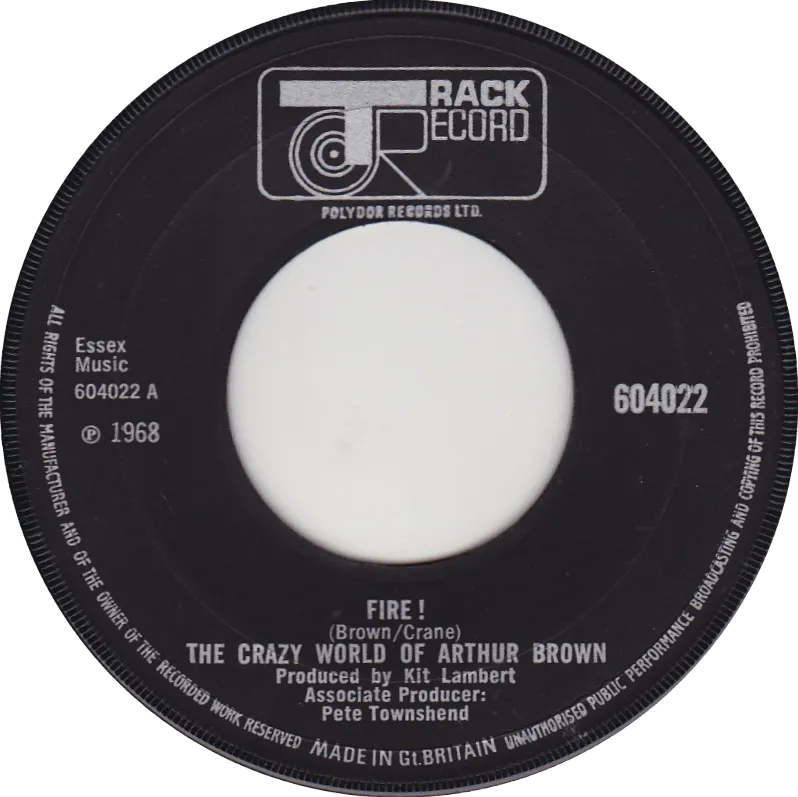
Photo: Track Records, Public domain, via Wikimedia Commons
Here's something worth sitting with for a second: the music that came out of Black American neighborhoods in the late 1960s — raw, rhythmic, politically charged, deeply rooted in the body — didn't stay put. It caught a flight. Actually, it caught several. And when it landed in Nigeria and Brazil, it didn't just get adopted. It got argued with. Pushed. Stretched into shapes its originators never imagined. Then, quietly, it made its way back home and changed everything all over again.
That's the story of funk's global round trip, and it's one of the most fascinating chapters in the history of American music — even if most American music fans have never heard it told straight.
What Left the Dock and Why It Traveled So Fast
By the time James Brown dropped "Cold Sweat" in 1967, something seismic had shifted in popular music. The backbeat wasn't just a backbeat anymore. The bass wasn't just holding down the bottom. Rhythm had become the message. And that message — rooted in African American experience, in the tension between freedom and oppression, in the pure physical insistence of the groove — was remarkably easy to receive no matter where you were on the map.
Vinyl moved. Radio signals jumped. Sailors, soldiers, students, and diplomats carried records in their luggage. By the early 1970s, James Brown was a household name in places that had no cultural framework for Ohio Players or Sly Stone but understood, on some molecular level, exactly what the music was saying.
Nigeria and Brazil received it loudest. And what they did with it is still echoing today.
Fela Kuti and the Lagos Remix
Fela Anikulapo Kuti had actually been to America. He studied music in London, spent time in Los Angeles in the late 1960s, and came back to Lagos carrying records and a radically expanded sense of what Black music could do politically. He heard James Brown and heard a kindred spirit — someone using rhythm as a weapon, using the stage as a platform, refusing to let the music be just entertainment.
But Fela didn't imitate. He translated. He took the one-chord vamps and the horn stabs and the call-and-response vocal patterns and ran them through Yoruba musical tradition, through the polyrhythmic complexity of West African drumming, through his own blistering political fury at Nigerian military rule. The result was Afrobeat — a sound that could stretch a single groove across twenty minutes without ever losing tension, that used the saxophone like a megaphone and the rhythm section like a marching army.
Songs like "Zombie" and "Expensive Shit" weren't just funky. They were dangerous. The Nigerian government knew it. Fela's compound, the Kalakuta Republic, got raided. His mother was thrown from a window. He kept recording anyway.
What's remarkable is how much of American funk DNA you can hear in Afrobeat — and how little it sounds like American funk. Fela took the vocabulary and wrote entirely new sentences. The groove was still there, but it served a different master. This wasn't music to dance to at a club and forget. It was music to remember who you were and who was trying to make you forget.
Gilberto Gil and the Tropicália Experiment
Brazil's encounter with American funk and soul ran through a different filter — one that was equally political but aesthetically wilder. The Tropicália movement of the late 1960s, centered in São Paulo and Salvador, was basically a deliberate collision of influences: American rock, bossa nova, Candomblé rhythms, European avant-garde, and yes, the soul and funk pouring out of the United States.
Gilberto Gil was one of its architects. Where Fela absorbed funk's political weight, Gil was drawn to its sensory freedom — the way soul music wore its emotions on the outside, the way funk gave the body permission to be loud. He layered those qualities over Brazilian rhythmic traditions, particularly the Afro-Brazilian percussion that connected directly back to the same African roots that had shaped American funk in the first place.
The result was something psychedelic and earthy at the same time. Gil's recordings from this period sound like the Atlantic Ocean itself trying to have a conversation — African rhythms that crossed to America, became funk, crossed to Brazil, got mixed with their own African descendants, and emerged as something that belonged to all three places and none of them exclusively.
The Brazilian military dictatorship, like Nigeria's generals, didn't miss the point. Gil and fellow Tropicalist Caetano Veloso were arrested, detained, and eventually exiled to London. The music was too free. That's usually a sign you're doing something right.
The Return Voyage
Here's where the story gets really interesting for American ears. The mutations that happened in Lagos and São Paulo didn't stay overseas.
Afrobeat's influence started seeping back into American music in the 1980s and accelerated through the 1990s. You can hear it in the extended rhythmic workouts of bands like Antibalas, the Brooklyn collective that became one of the most important Afrobeat acts in the world — in Brooklyn, not Lagos. You can hear it in the polyrhythmic layers that producers started building into hip-hop and R&B tracks. You can hear it in the way contemporary artists like Burna Boy and Wizkid — themselves inheritors of Fela's tradition — are now dominating American playlists and collaborating with Beyoncé and Drake.
Tropicália's return was subtler but just as real. The psychedelic soul experiments of artists like D'Angelo and Erykah Badu, the genre-blending of Brazilian-influenced funk carioca that eventually morphed into baile funk and crossed into American club culture — all of it carries traces of that original round trip.
Even the current Afrobeats wave (note the extra 's' — a distinct modern genre) that's reshaping American pop charts is, in a very real sense, funk's grandchildren coming home.
A Language, Not a Trademark
What this history really tells us is that funk was never the exclusive property of any single place or moment. It was — and is — a musical language. A set of principles: the primacy of rhythm, the communal power of the groove, the refusal to separate the body from the political and spiritual self.
American artists invented a particular dialect of that language. But Fela Kuti and Gilberto Gil heard the underlying grammar and realized they already knew it. Their communities had been speaking related languages for centuries — languages that had been partially silenced by colonialism and the Atlantic slave trade, languages that American funk, ironically, helped them remember.
So when we talk about funk's global influence, we shouldn't picture a one-way export. We should picture a conversation — messy, overlapping, sometimes shouted across an ocean — that's still going on right now every time a Burna Boy track drops or a DJ in São Paulo flips a James Brown sample under a baile funk beat.
The groove went out. The groove came back. And every time it crosses water, it comes back a little deeper.
That's the funkiest story in music history, and we're still in the middle of it.