Dressed to Resist: How Funk and Soul Artists Turned the Dancefloor Into a Political Runway
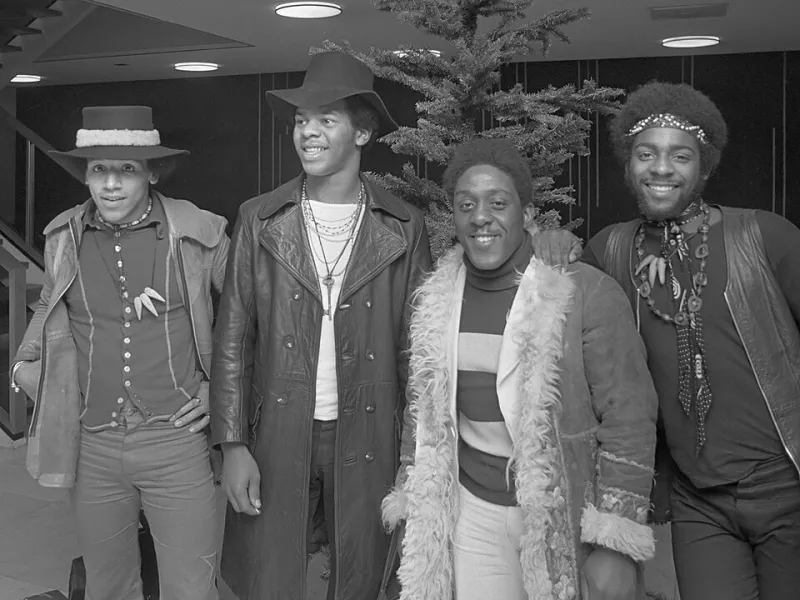
Photo: Hans Peters for Anefo, CC BY-SA 3.0, via Wikimedia Commons
There's a photograph of George Clinton from sometime around 1976 that stops you cold. He's draped in a full-length fur coat the color of a highlighter, wearing platform boots tall enough to qualify as architecture, his hair exploding outward like he's personally conducting electricity. He looks absolutely unhinged. He looks absolutely free. And that, right there, is the whole point.
Funk fashion wasn't decoration. It was declaration.
In an era when Black Americans were still fighting for basic civil rights protections, still navigating the raw aftermath of assassinations and urban uprisings, the artists who built the funk and soul canon made a calculated — and deeply radical — choice: they were going to take up space. Loudly. Colorfully. Unapologetically.
The Suit Was Never Just a Suit
To understand what funkadelic fashion was pushing against, you have to understand what it was replacing. For much of the early civil rights era, respectability politics shaped how Black public figures presented themselves. The message, often enforced from within the community as much as from outside it, was: dress conservatively, move carefully, make yourself legible to white America.
James Brown started cracking that mold in the mid-1960s. His capes, his pompadour, his rhinestone-studded jumpsuits — they weren't just showmanship. They were a statement about ownership. I own this stage. I own this body. I own this moment. By the time Sly Stone walked out in a white fur jumpsuit and a wide-brimmed hat that could double as a satellite dish, the message had escalated into something closer to a manifesto.
Soul and funk artists were, in the words of Howard University fashion historian Dr. Renee Carter (speaking at a 2022 panel on Black aesthetics), "building a visual language that said Black excellence doesn't need your approval to exist."
Afrocentric Codes and the Politics of the Print
While the platform boots and bell-bottoms grabbed headlines, some of the most politically loaded fashion choices happened in the details. Kente cloth patterns showing up on stage outfits. Natural hair — Afros, braids, locs — worn not as a style trend but as a direct rebuttal to decades of pressure to chemically straighten and conform. Earth tones and mud cloth-inspired prints threading through the wardrobes of artists like Roberta Flack and Nina Simone.
This wasn't accidental. The Black Power movement had seeded a cultural shift in how African Americans related to their own aesthetic heritage, and funk and soul artists became some of its most visible ambassadors. When Parliament released Mothership Connection in 1975, the album art and accompanying tour visuals were essentially a full Afrofuturist fashion collection — reimagining Black identity not just in the present, but across time and space.
The message was layered: We were here before this country tried to erase us. We'll be here long after it tries again.
The Designers Behind the Drip
None of this happened in a vacuum. Behind every outrageous George Clinton ensemble or Earth, Wind & Fire stage costume was a network of largely uncelebrated Black designers, tailors, and stylists who were doing some of the most innovative work in American fashion — just without the Vogue spreads.
Designers like Larry LeGaspi, who created many of the iconic looks for LaBelle and Kiss alike, operated at the intersection of glam and groove. His work for Patti LaBelle and the group's 1974-era aesthetic — silver platform boots, feathered shoulder pieces, metallic bodysuits — was as avant-garde as anything happening in Paris or Milan. It just happened to be Black women wearing it, so mainstream fashion largely looked away.
That erasure is something contemporary designers are actively working to correct.
"When I started researching the roots of what I was doing, I kept finding these Black artists and designers who had already done it — and done it better — decades before," says Atlanta-based designer Marcus Webb, whose 2023 collection drew heavily on 1970s funk aesthetics. "The platforms, the metallics, the Afrocentric embroidery — all of it was already there. I'm not reinventing anything. I'm excavating."
2024: The Revival Is Real
Walk through any major fashion week presentation today and you'll catch the echoes. Exaggerated silhouettes. Maximalist color. Natural textures woven into high-fashion contexts. Designers like Kerby Jean-Raymond of Pyer Moss have been explicit about drawing from Black musical and cultural history, and a younger generation of stylists working with contemporary R&B and hip-hop artists is doing the same work, just with a 2024 vocabulary.
New York-based stylist Danielle Osei, who has worked with several rising R&B artists on their visual identities, puts it plainly: "Funk fashion gave us the blueprint for how to use clothes as a form of communication. These artists weren't just getting dressed. They were sending a message. That's what I think about every time I'm building a look."
The revival isn't purely nostalgic, either. It's responsive. In a cultural moment when conversations about Black identity, representation, and resistance are as urgent as they've ever been, the aesthetic codes of funk and soul carry fresh meaning. A wide-lapel suit in a color that has no business existing. A headwrap that references the diaspora. Platform shoes that add literal inches to how much space you occupy in a room.
These choices still say what they always said: I am here. I am not asking for permission.
The Groove Was Always the Message
What makes funkadelic fashion so enduring as a form of cultural expression is that it was never separable from the music itself. The beat and the outfit were making the same argument. When Bootsy Collins slapped a bass line that made the floor shake, his star-shaped glasses and glitter-spattered jumpsuits were the visual equivalent of that low-end frequency — impossible to ignore, impossible to contain.
Funk understood something that a lot of political movements struggle with: joy is not the opposite of resistance. Sometimes joy is the resistance. Dressing outrageously, dancing freely, taking up space with your body and your clothes in a world that has historically tried to minimize you — that's not escapism. That's defiance with a backbeat.
The dancefloor was always a political space. The artists who built funk and soul just made sure you could see it from across the room.