Down the Rabbit Hole: How YouTube Is Minting a Brand New Class of Funk Scholars
The Algorithm Didn't Mean To, But It Did
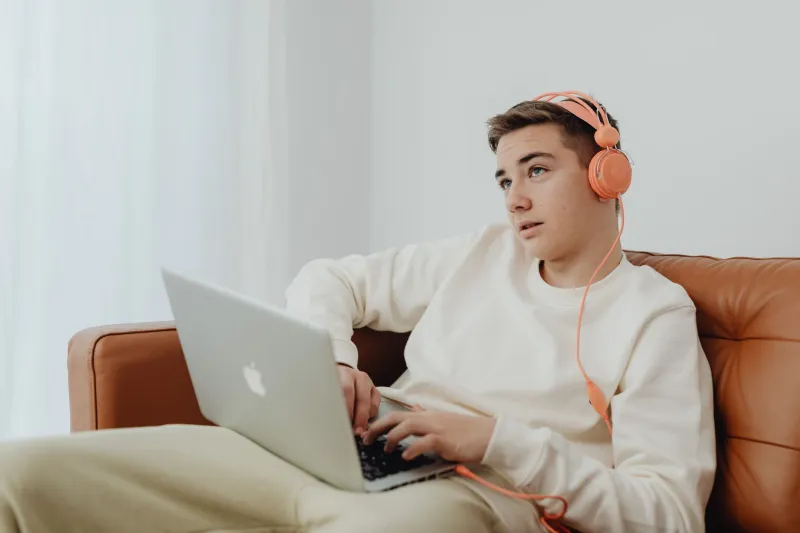
Nobody planned for YouTube to become the world's most effective funk music school. The platform's recommendation engine was built to keep eyeballs on screens, not to educate a nineteen-year-old in Ohio about the Meters' influence on New Orleans second-line culture. But here we are. Somewhere between a lo-fi study playlist and a random autoplay suggestion, a whole generation of young Americans is stumbling headfirst into one of the richest musical traditions the country has ever produced.
It usually starts innocently enough. Maybe it's a clip of Bruno Mars performing "Treasure" that gets recommended alongside a vintage Earth, Wind & Fire concert. Or a TikTok sound that sends someone searching for the original sample, which turns out to be a Sly and the Family Stone deep cut from 1971. One click leads to another, and before long the viewer is watching a two-hour documentary on the history of Stax Records at midnight on a Tuesday.
This is the FunkDoc effect in its purest form — the groove finding its way to new ears through whatever door happens to be open.
What the Old Way Looked Like
For previous generations, getting into funk and soul was a physical, communal experience. You heard it blasting from someone's car on the block. An older cousin handed you a worn-out cassette. A local radio DJ — the kind who actually knew the music and talked about it like it mattered — spun a deep cut between the hits and changed your life in three and a half minutes.
Vinyl culture played its own role. Record stores were social spaces where knowledge passed between people who had been living with this music for decades. You couldn't just skip to the good part. You had to sit with an album, read the liner notes, absorb the whole thing.
That path still exists, but it's no longer the only one — and for a lot of younger fans, it's not even the most common one.
Three Hours Deep and Still Going
Take Marcus, a 22-year-old graphic design student from Atlanta who describes his introduction to funk as "an accident that changed everything." He was watching a video essay about sample-based hip-hop production when the algorithm served him a clip of Parliament's 1976 performance at the Houston Summit. He didn't stop watching until he'd gone through George Clinton's entire catalog history, a fan-made documentary about Bootsy Collins, and a forty-five-minute breakdown of what makes a bass line genuinely funky.
"I didn't even know what I was looking for," he says. "But by the end of it I felt like I understood something real. Like I'd actually learned something, not just heard something."
That distinction matters. Passive listening and active discovery are different experiences, and the video format — with its visual context, performance footage, and creator commentary — seems to accelerate comprehension in a way that audio alone sometimes doesn't.
Content Creators as Cultural Translators
A significant part of what makes these rabbit holes so effective is the layer of human curation sitting between the archive footage and the new viewer. A growing community of music-focused YouTubers and short-form video creators has taken on the role that radio DJs and record store clerks once played — breaking down context, explaining references, and making fifty-year-old music feel urgent and alive.
Channels dedicated to music history, sample archaeology, and live performance breakdowns have built substantial audiences by treating funk and soul not as nostalgia, but as living knowledge worth understanding. When a creator spends twenty minutes explaining why Clyde Stubblefield's drum pattern on "Funky Drummer" became the most sampled break in hip-hop history, they're not just entertaining — they're teaching.
Music educator and YouTuber Danielle Reeves, who runs a channel focused on Black American music history, puts it plainly: "The young people coming to this music through video aren't casual fans. They're curious. They want to know why something sounds the way it does, who made it, what was happening in the world when it was recorded. The format rewards that kind of engagement."
The Gaps and the Gifts
This new mode of discovery isn't without its complications. The algorithm doesn't have a curriculum. It optimizes for engagement, which means a viewer is far more likely to encounter a viral concert moment than a thoughtful examination of the economic conditions that shaped funk's independent label era. Certain artists get surfaced constantly while others — equally important, equally brilliant — stay buried.
There's also the question of context that gets lost when music is consumed in fragments. A three-minute clip of Aretha Franklin performing "Respect" is powerful on its own, but understanding what that song meant to the civil rights movement, what it cost her to record it, and how it was received requires more than the algorithm is going to hand you automatically.
Still, the young fans showing up in funk and soul communities — online and off — are arriving with a hunger that more than compensates for any gaps. They're cross-referencing what they find. They're joining Discord servers and Reddit threads. They're buying records after watching video essays about them. Some are even tracking down the session musicians who played on classic albums and interviewing them for their own channels.
What This Means for the Groove Going Forward
Funk's cultural longevity has always depended on transmission — on the music moving from one generation to the next through whatever channels were available. In the 1970s that was live performance and radio. In the 1980s and 90s it was hip-hop sampling, which introduced entire new audiences to the source material. In the 2000s it was the internet's first wave, blogs and MP3 sharing and early YouTube uploads of grainy concert footage.
Now we're in a new phase, one where a teenager in rural Minnesota can spend a weekend going deeper into the history of funk than some lifelong fans ever managed — not because they went looking for it, but because the algorithm handed them a door and they decided to walk through it.
The groove has always found a way. It's just finding new routes now.
And honestly? Watching a new generation fall hard for this music — arguing about the greatest bass players, debating which Funkadelic album hits hardest, discovering that the Isley Brothers were doing things in the early 70s that still sound futuristic — that's not a dilution of the culture. That's the culture doing exactly what it was always meant to do.
Spread. Evolve. Keep moving.