Locked in the Vault: The Legendary Funk Sessions That Never Saw the Light
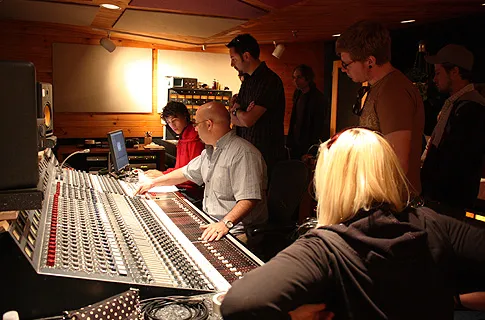
Photo: Metalworks Institute, CC BY-SA 3.0, via Wikimedia Commons
There's a version of funk history that lives on tape reels in climate-controlled storage rooms, in cardboard boxes stacked in producers' garages, and in the memories of session musicians who played on recordings the world never heard. It's a parallel universe of grooves — some abandoned by accident, some buried by record label politics, and some deliberately shelved by artists who decided the world just wasn't ready.
These aren't B-sides or bonus tracks. We're talking about full-blown sessions — sometimes entire albums — that represent some of the most adventurous creative moments in funk and soul history. And the story of why they stayed hidden is just as compelling as the music itself.
The Session That Almost Changed Everything
In the early 1970s, Sly Stone was already deep into the dark, paranoid funk of There's a Riot Goin' On when he reportedly began recording a follow-up that pushed even further into experimental territory. Collaborators from that era have described sessions at his Bel Air mansion that veered between dense, layered percussion workouts and stripped-down, almost ambient soul — music that sounded nothing like what any funk artist was doing at the time.
Very little of that material has ever surfaced officially. Archivists and music historians who've spoken to people close to those sessions describe a body of work that essentially predicted a lot of what would happen in avant-garde Black music over the following two decades. The reasons it stayed locked away are murky — a combination of Sly's increasingly erratic behavior, label pressure, and the sheer instability of the creative environment around him at the time.
"When you hear descriptions of those sessions, you realize how much was being left on the table," says one producer who has spent years cataloging unreleased funk recordings from that era. "It wasn't just lost music. It was lost context for understanding where the genre could have gone."
Label Politics and the Art of the Shelved Record
Not every unreleased funk classic disappeared because of creative chaos. A significant number of sessions were deliberately buried by record labels who either didn't understand what they had or were too focused on replicating existing commercial formulas to take a risk on something new.
The mid-1970s were particularly brutal in this regard. As disco began consuming mainstream radio, funk artists who were pushing in rawer, harder directions often found themselves at odds with A&R departments chasing a cleaner, more polished sound. Whole albums were recorded and then quietly set aside when labels decided the market had shifted.
Archivists who work with major label catalogs describe vaults that are essentially museums of roads not taken. "You pull out a box from 1976, and there's a complete funk record in there that nobody's heard," one archivist explained. "The musicianship is incredible. The production is tight. And it just sat there for almost fifty years because somebody in an office decided it wasn't commercial enough."
Some of those recordings have started making their way out through reissue labels and archival projects. But many remain in legal limbo, tangled up in rights disputes between estates, former label subsidiaries, and musicians who may or may not have been properly compensated for the original sessions.
What the Lost Tapes Sound Like
For contemporary artists and producers, the emergence of even fragments of these unreleased sessions has been genuinely revelatory. Producers working in neo-soul, hip-hop, and modern funk have described encountering bootleg recordings or archival clips that completely reframed their understanding of what the genre was capable of.
One Detroit-based producer who works primarily in hip-hop described hearing a snippet of an unreleased Ohio Players session from the early 1970s — before the band had fully developed their signature sound — as a moment that changed how he thought about rhythm. "The drums on that track were doing something I'd never heard in funk before. It was almost like jazz drumming filtered through a completely different sensibility. And it never came out. Nobody heard it. I just stumbled onto it through a collector."
That kind of influence — transmitted through underground channels, passed between collectors and producers, filtering into new music without most listeners ever knowing the source — is one of the stranger and more beautiful aspects of how lost funk recordings continue to shape the genre.
The Archivists Keeping the Groove Alive
The people doing the actual work of recovering and preserving these recordings occupy a fascinating space between music historian, detective, and cultural custodian. They deal in degraded tape, incomplete documentation, and the complicated task of figuring out who actually owns what.
Several archivists working in this space have noted a recent uptick in interest from streaming platforms and documentary filmmakers, which has created both opportunities and complications. On one hand, there's more funding available for preservation work than there used to be. On the other hand, commercial interest doesn't always align with the kind of careful, context-sensitive approach that does justice to the music and the artists who made it.
"The danger is that people start treating these recordings like content," one archivist cautioned. "These were real creative decisions made by real artists in specific moments. The context matters as much as the music."
What Could Have Been — and What Still Might Be
The optimistic read on all of this is that the story isn't over. Estates are becoming more engaged with their catalogs. Reissue labels with genuine curatorial integrity are doing important work. And a new generation of music fans, raised on streaming but hungry for depth and history, has created real demand for this kind of material.
There's also the question of what contemporary artists do with the influence of recordings they've encountered through collectors and archivists. In some ways, the lost tapes are already out in the world — just translated, filtered through other artists' interpretations, showing up in unexpected places.
The vaults aren't empty. And the grooves locked inside them still have something to say.